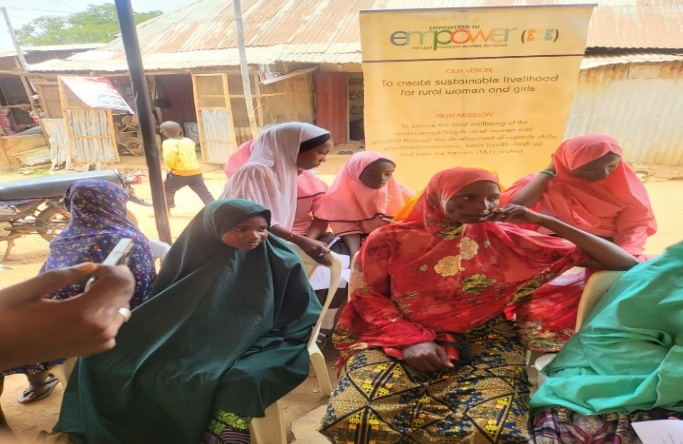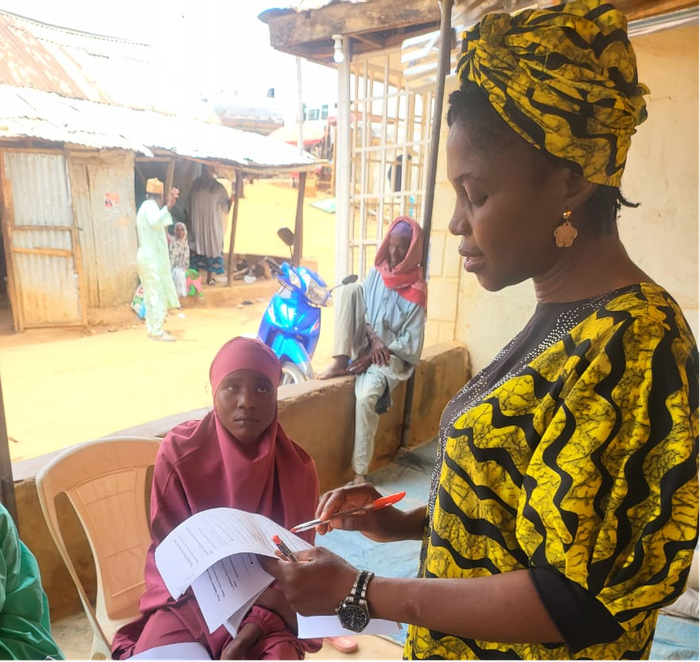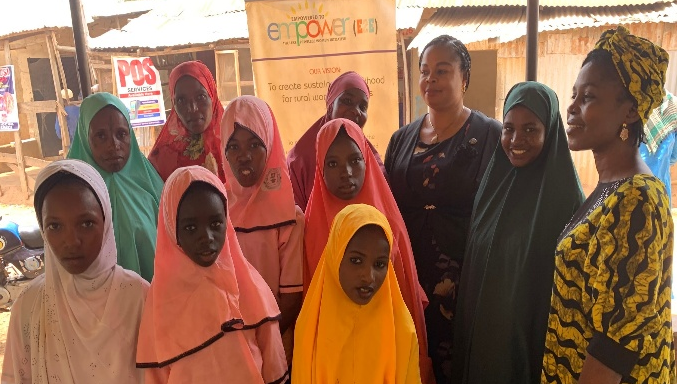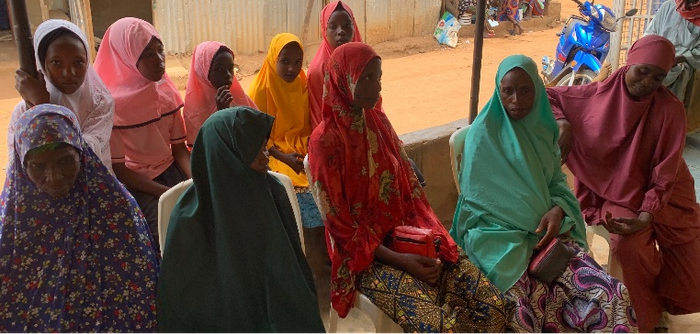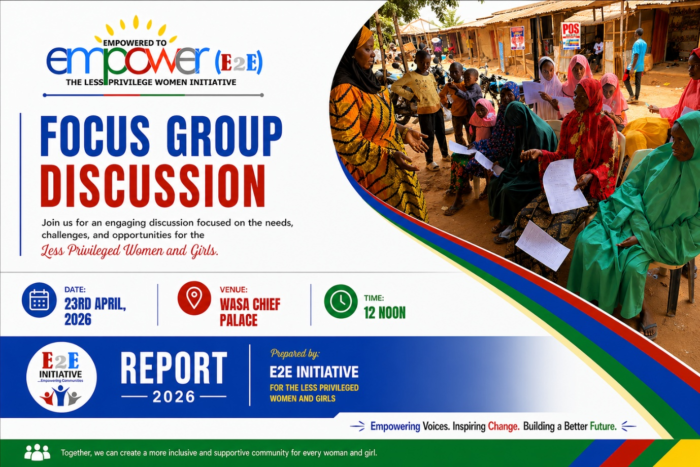
REPORT OF THE E2E INITIATIVE FOCUS GROUP DISCUSSION FOR LESS PRIVILEGED WOMEN AND GIRLS HELD AT WASA CHIEF PALACE ON 23RD APRIL 2026.
Themes: Economic Empowerment, Education, WASH Initiatives, Inclusive Participation
The Empowered-to-Empower (E2E) Initiative Focus Group Discussion (FGD) for less privileged women and girls was conducted at the Wasa Chief Palace on 23rd April 2026. The session engaged a total of ten (10) participants, comprising five (5) adolescent girls, two (2) young women, two (2) adult women, and one (1) elderly woman.
The methodology adopted for the discussion was participatory and qualitative, utilizing guided questions to facilitate open dialogue and encourage inclusive contributions from all participants. This approach enabled the collection of firsthand insights into the socio-economic realities, challenges, and aspirations of women and girls within the community.
Findings from the discussion revealed that the community, under the leadership of the Chief, is largely peaceful. However, it lacks access to government-supported opportunities and social intervention programmes, which has limited development outcomes for women and girls.
In terms of Water, Sanitation and Hygiene (WASH), the community faces significant challenges. There is no reliable access to clean water, and residents depend primarily on a nearby stream for daily water needs. Although a borehole was donated by Qatar Charity (QC), its supply is insufficient, often serving only a portion of the community on a rotational basis of 7 days. Due to high demand, many households are left without access. This situation places a heavy burden on women and girls, who spend considerable time fetching water each day. The lack of adequate WASH facilities also affects menstrual hygiene management, as girls and women resort to using cloth during their menstrual periods and often remain at home for 4–5 days due to discomfort and limited sanitary resources.
On economic empowerment, participants indicated that livelihood activities are largely informal and subsistence-based. Most adult women engage in the sale of nunu (locally fermented milk), while others combine this with small-scale farming of crops such as maize, millet, and dawa, as well as rearing poultry, cows, and rams. Despite these efforts, there is limited knowledge of structured economic empowerment opportunities, access to finance, or market linkages. Moreso, the nunu sales is seasonal, between January and August every year.
Regarding education, the community demonstrates a general appreciation for its importance; however, there are no established women’s groups, networks, or cooperatives to support or advocate for educational advancement. School attendance is largely dependent on parental decisions and financial capacity. Furthermore, schools in the community face critical challenges, including a lack of clean water and a shortage of qualified teachers. As a result, many pupils in upper basic levels (Basic 3–6) struggle with basic literacy and numeracy skills.
Individual aspirations were also highlighted during the discussion. Adamu Mohammed Shettima, a young woman expressed a strong desire to further her education but is constrained by financial limitations, while Aisha Zakari indicated interest in acquiring tailoring skills, subject to her husband’s approval.
The overall discussion underscores the urgent need for targeted interventions in WASH, education, and economic empowerment, alongside efforts to strengthen community structures that promote inclusive participation and access to opportunities for women and girls.